
Why So Many People Relate to the Nihilist Penguin Right Now


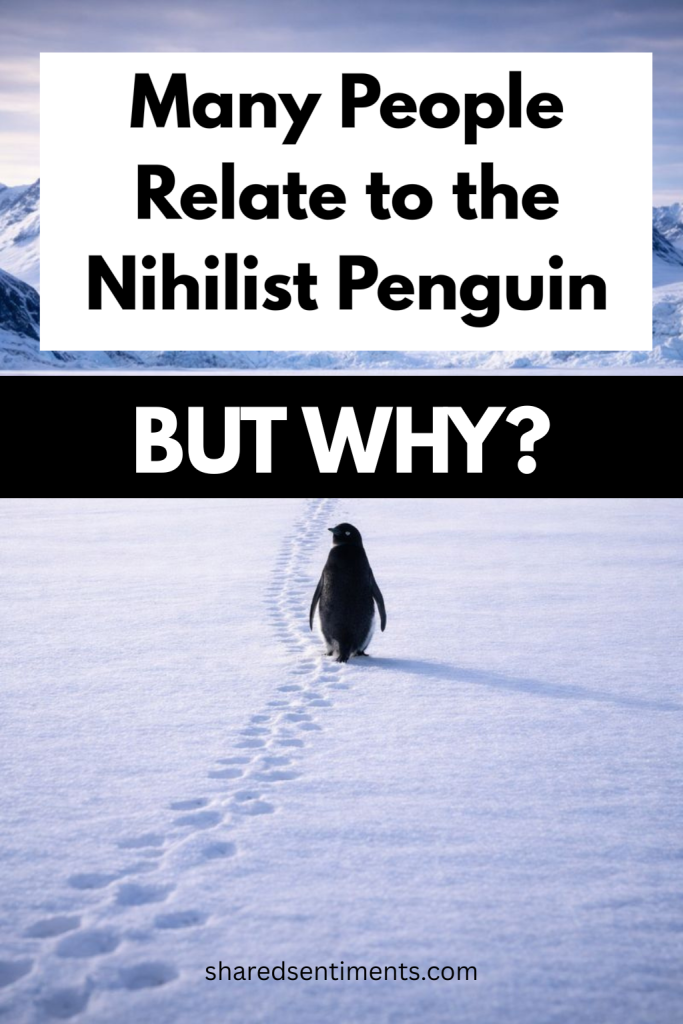
A short clip of a penguin walking away from the ocean shouldn’t feel so personal. Yet for millions of people, it did. No dramatic music. No big moment. Just a small penguin waddling in the opposite direction, alone, unbothered, and oddly exhausted.
People laughed, shared it, turned it into memes—but underneath the humor was recognition.
That penguin looked like how many people feel inside: tired of pushing, unsure of direction, still moving but without excitement. The reaction wasn’t random. It reflected something deeper happening in modern life.
You might like: 45 Things to Do Instead of Spending Money & Buying More Stuff
The Nihilist Penguin Mirrors Emotional Burnout
Burnout no longer looks like collapse. It looks quiet. It looks functional. It looks like showing up every day without feeling present. The nihilist penguin resonated because it didn’t panic or rush—it just kept going, detached and drained.
Psychological research shows that chronic stress leads to emotional numbness, a state where motivation fades but routine continues. The World Health Organization recognizes burnout as a result of prolonged unmanaged stress, not weakness.
Neuroscience explains this response as nervous system overload. When stress hormones stay high for too long, the brain shifts into energy-saving mode. Emotions flatten. Curiosity fades. Survival replaces joy.
People didn’t see laziness in that penguin. They saw exhaustion. That’s why it felt familiar.
“Burnout doesn’t mean you stopped caring. It means you cared for too long without rest.”
Modern Life Has Made Meaning Feel Slippery
Many people today are not struggling to survive—they are struggling to feel purpose. Work blends into life. Screens never turn off. Productivity culture rewards constant output but rarely fulfillment.
Studies in existential psychology show that when meaning feels unclear, people experience emotional detachment rather than sadness. This is called existential fatigue. You keep moving because stopping feels worse, yet nothing feels truly rewarding.
The nihilist penguin didn’t look dramatic or hopeless. It looked indifferent. That indifference reflects how many people respond when goals stop feeling personal and life becomes a checklist.
Meaning used to come from connection, community, and slower rhythms. When those disappear, people don’t collapse—they drift.
“Sometimes the problem isn’t that life is hard. It’s that it feels empty.”
Humor Has Become a Coping Language
People didn’t just watch the nihilist penguin—they joked about it. Humor is one of the brain’s strongest coping tools. It allows people to express discomfort without vulnerability overload.
Psychological studies show that dark humor helps regulate stress by creating emotional distance from pain. Laughing at something doesn’t mean you don’t feel it—it means you found a safe way to hold it.
The penguin became a shared joke because it offered permission to say, “I’m tired,” without explaining everything. It was emotional shorthand for burnout, confusion, and quiet resignation.
Memes often trend not because they’re funny, but because they’re honest in a way words struggle to be.
“If you can laugh at it, you can survive it.”
The Brain Is Wired to Relate to Simple Struggles
Humans naturally project emotions onto animals. Neuroscience calls this emotional mirroring. When we see movement that resembles human behavior, the brain activates empathy circuits automatically.
Research using fMRI scans shows that observing relatable actions triggers the same neural pathways as experiencing them. The penguin’s slow walk activated recognition, not logic.
It didn’t matter that scientists explained the behavior as normal. Emotion comes before reason. People didn’t relate to the facts—they related to the feeling.
The brain recognized itself in that moment: moving forward without certainty.
“We don’t connect through facts. We connect through feelings.”
Why This Moment Feels So Widespread Right Now
Global uncertainty, rising costs, constant comparison, and digital overload have reshaped emotional health. Many people feel behind, tired, and unsure, even when they’re doing “everything right.”
Mental health research shows that collective stress creates shared emotional states. When many people feel the same quiet exhaustion, symbols spread faster. The nihilist penguin became one of those symbols.
It didn’t promise motivation. It didn’t sell hope. It simply existed—and that honesty felt refreshing.
People aren’t looking for inspiration all the time. Sometimes they just want recognition.
“You’re not unmotivated. You’re overwhelmed.”
What the Nihilist Penguin Is Really Teaching Us
This moment isn’t about giving up. It’s about acknowledging fatigue without shame. The penguin didn’t stop moving—it just stopped pretending to be excited.
Psychologists emphasize that rest, reflection, and emotional honesty restore motivation more effectively than pressure. Healing starts when people feel seen, not pushed.
Relating to the nihilist penguin doesn’t mean life is meaningless. It means many people need space to breathe before meaning returns.
Sometimes the most powerful step forward is slowing down without guilt.
“You don’t need to know where you’re going to keep going.”
Final Thoughts
The nihilist penguin didn’t go viral because it was strange. It went viral because it was real. In a world obsessed with hustle, that quiet walk felt like truth. If you saw yourself in that penguin, it doesn’t mean you’re lost. It means you’re human—and ready for gentler answers.


