20 Calming Bedroom Ideas for Anxiety: What Actually Works in 2026

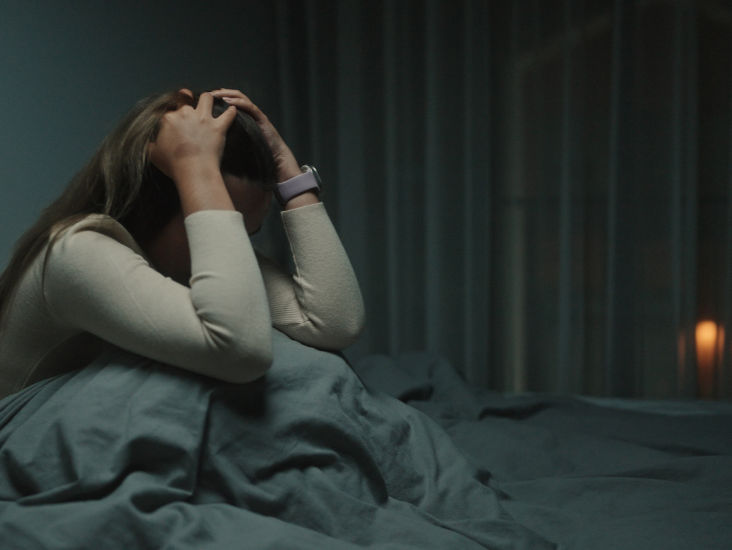
You’re exhausted. Your eyes are heavy. But the moment your head hits the pillow, your brain switches on.
You replay conversations. You think about tomorrow. You stare at the ceiling.
Sound familiar?
You’re not alone. According to the Sleep Foundation, 54% of adults say stress and anxiety are the top reasons they can’t fall asleep. The American Academy of Sleep Medicine found that 68% of U.S. adults report disrupted sleep because of anxiety. This is not a small problem.
Here’s something most people don’t know: your bedroom itself might be making your anxiety worse. Not your thoughts. Not your schedule. The actual room you sleep in.
The good news? You can fix it. No full renovation needed. No big budget required.
These 20 calming bedroom ideas are backed by real research from 2024 and 2025. Each one is something you can actually do. Some take 10 minutes. Some cost nothing at all.
Let’s get into it.
Before you scroll through all 20 ideas wondering which ones actually apply to your room, take 60 seconds to find out. I built a quick Bedroom Anxiety Audit below that walks you through your current setup and gives you a personalized Calm Score with a glowing moon that fills up as your room gets more sleep-friendly. At the end, it picks the three fastest fixes you can do tonight based on your actual answers, so you’re not overwhelmed by the full list. Give it a try — then keep reading for the deeper breakdown on each one.
Bedroom Anxiety Audit
Tap everything that’s true about your bedroom right now
0 of 15 checked
Why Your Bedroom Design Affects Anxiety (And Why This Matters First)
Before the ideas, you need to know one thing.
Your brain never fully stops reading your environment. Even when you close your eyes, your nervous system is still picking up signals from the room around you. Is it safe? Is there unfinished work? Is there light? Is there noise?
A 2024 study published in the Journal of Environmental Psychology found that people in cluttered, poorly lit bedrooms took 23% longer to fall asleep on average. Not because they were more stressed people. Because their room was sending the wrong signals.
Research from 2026 explains it this way: every object in your bedroom requires background cognitive processing, even when you’re not consciously looking at it. A pile of laundry. A work laptop. A stack of unopened mail. Each one tells your brain: there is something here that needs to be dealt with. That keeps your cortisol levels up when they should be dropping.
Here’s what this means for you. Your bedroom is either working for your nervous system or against it. The ideas below are about flipping that switch.
Ideas 1–3: Paint Colors That Actually Lower Your Heart Rate
Idea 1: Paint Your Walls Soft Blue or Sage Green
This is not just interior design advice. It’s biology.
The American Psychological Association has found that cool tones — soft blues and greens — lower blood pressure and heart rate. Interior designer Brynn Olson puts it simply: “Serene grey greens and blues make for a perfect palette in a bedroom. You want a calming color tone that promotes sleep and relaxation.”
If you want specific paint names to start with: Sherwin-Williams Sea Salt (SW 6204) and Clary Sage (SW 6178) are both widely recommended by sleep-focused designers in 2025 and 2026.
Idea 2: Try a Warm Neutral If Cool Colors Feel Too Cold
Blue walls aren’t for everyone. And that’s okay.
Warm neutrals — taupe, warm white, sandy clay — work just as well for people sensitive to color overstimulation. Ginger Curtis, founder of Urbanology Designs and a Neuroaesthetics expert, explains: “A balanced neutral with both warm and cool notes, taupe promotes relaxation by feeling steady and unobtrusive — ideal for clients sensitive to color overstimulation.”
These tones don’t shout. That’s the point.
Idea 3: Use Matte Finish Paint, Not Gloss
This one costs nothing extra. When you’re repainting, choose matte or eggshell finish over gloss or satin.
Glossy walls reflect light back into the room. At night, that creates more visual stimulation when you need less. Matte walls absorb light instead. They make the room feel quieter. Your walls should fade into the background at bedtime — not bounce light around.
Quick win tonight: Look at your current walls. If they’re white and glossy, a single coat of matte paint on just one accent wall is a low-cost starting point.
Ideas 4–6: Lighting Is the Fastest Change You Can Make
Idea 4: Switch to Warm Bulbs (Under 3000K)
This is the highest ROI change in this entire list. It takes five minutes and costs about $10.
Research from the University of Oxford (2025) found that using warm, dim lighting 90 minutes before bed increased melatonin levels by up to 40%. Melatonin is the hormone that tells your body it’s time to sleep. Blue and cool white light suppress it. Amber and warm light don’t.
Look for bulbs labeled “warm white” or “soft white” at 2700K or lower. Philips Hue smart bulbs are a popular option because you can set them to dim automatically at a set time each night.
Idea 5: Hang Blackout Curtains
Even small amounts of light at night disrupt your deep sleep cycles. Streetlights. A neighbor’s porch light. The glow from a passing car.
Blackout curtains block all of it. The Better Sleep Council is direct on this: blocking external light is essential for protecting sleep quality. NICETOWN and LULL are two brands sleep experts frequently recommend for genuinely light-blocking options (look for “100% blackout” in the product description, not just “room darkening”).
Idea 6: Cover Every Standby LED in Your Bedroom
This sounds minor. It is not.
The NIH notes that even a small LED — like the standby light on a TV or the display on a digital clock — can reduce melatonin production by up to 50%. Cover them with black electrical tape. Turn the clock away from your bed. Use a smart plug to cut power to devices at night.
Quick win tonight: Walk around your bedroom right now. Count every LED light you can see. Cover or remove each one.
Ideas 7–9: Declutter Without Becoming a Minimalist
Idea 7: Clear Your Nightstand
Your nightstand is the last thing you see before sleep and the first thing you see when you wake up. If it’s covered in items, your brain registers all of them as unfinished business.
Keep only what you need for sleep: a glass of water, a book, and maybe a lamp. That’s it.
Idea 8: Remove Work Items from the Bedroom Entirely
A laptop. A notebook with tomorrow’s to-do list. A work bag near the door.
Each one signals to your brain that this room is a place for productivity. Your brain cannot easily switch from “work mode” to “rest mode” in the same space where work items live. This is not willpower. It’s neuroscience.
Move them out. Even putting your laptop in a closed drawer helps.
Idea 9: Use the “One Surface, One Purpose” Rule
Every surface in your bedroom should have one job. The dresser holds clothes. The nightstand holds sleep items. The floor holds nothing.
The Better Sleep Council puts it well: clutter doesn’t just look bad — it increases anxiety and overwhelm, making it harder to settle at night. You don’t need a perfectly styled room. You just need fewer signals of unfinished business visible from your pillow.
Quick win tonight: Set a 10-minute timer. Clear one surface only. Do not move to the next until that one is done.
Ideas 10–12: Bedding and Texture That Calm Your Nervous System
Idea 10: Switch to Natural Fiber Sheets
Polyester sheets trap heat. Overheating at night is a known anxiety trigger because your body needs to lower its core temperature to sleep properly.
Linen and cotton percale are breathable and get softer with every wash. For thread count: 200 to 400 in quality cotton is the sweet spot. Above that, you’re mostly paying for marketing.
Idea 11: Try a Weighted Blanket
Weighted blankets have strong evidence behind them. They work by providing deep pressure stimulation, which activates the vagus nerve and encourages your nervous system to shift into a calmer state.
Choose a blanket that is 7 to 12% of your body weight. YnM and Bearaby are two well-reviewed brands in 2025 and 2026 that offer consistent sizing guidance.
It’s worth being honest here: weighted blankets don’t work for everyone. Some people find them too warm or restrictive. If you’ve never tried one, some brands offer trial periods worth using.
Idea 12: Add Soft Texture Layers
A chunky knit throw. A bouclé cushion. A thick rug beside your bed.
This sounds decorative. But there’s real physiology here. Tactile input — the feeling of softness when you reach for something in the dark — activates the same calming pathways as deep pressure. Research notes that natural materials like wood, wool, and linen help balance the nervous system.
It also makes the room feel warmer and more inviting. You want your brain to associate the bedroom with comfort.
Ideas 13–15: Sound Management Most People Skip
Idea 13: Use a White Noise or Brown Noise Machine
Silence is not always the goal. Sudden, unexpected sounds are what pull you out of sleep — a car door, a neighbor, a notification from another room.
Brown noise (a lower, richer frequency than white noise) is gentler and preferred by many people with anxiety. Apps like Calm or dedicated machines like the LectroFan EVO or SNOOZ allow you to set and forget.
The Better Sleep Council is clear: what matters most is keeping sound steady and predictable. Background noise drowns out sudden interruptions.
Idea 14: Use Thick Textiles as Sound Absorbers
Heavy curtains, plush rugs, upholstered headboards, and soft furnishings all absorb ambient noise. This is free if you already own them. Just make sure they’re in the bedroom and not rolled up in a closet.
Research from 2025 found that layered textiles in “cocoon-style” bedrooms can reduce ambient noise by 15 to 25 decibels — enough to prevent the micro-awakenings that fragment sleep quality.
Idea 15: Consider an Acoustic Panel if Street Noise Is Unavoidable
Acoustic panels are no longer ugly foam squares. In 2025 and 2026, they’re sold as framed fabric wall art in dozens of sizes and styles. They absorb mid-to-high frequency sounds and can make a real difference in urban bedrooms.
This is the pricier option. It’s worth it only if other solutions haven’t worked.
Ideas 16–18: Scent Is the Most Overlooked Bedroom Tool
Idea 16: Diffuse Lavender Oil Before Bed
Here’s something most people don’t know about smell. It is the only sense that has a direct pathway to the brain’s limbic region — the part that handles emotion, memory, and arousal. It bypasses the thinking brain entirely.
This is why scent changes how you feel almost instantly, before you’ve even processed what you’re smelling.
Lavender has the most evidence behind it. It reduces heart rate, lowers blood pressure, and has been shown to ease anxiety and improve sleep quality. Use an ultrasonic diffuser with 3 to 5 drops of lavender essential oil, turned on 20 to 30 minutes before bed. You don’t need to spend much: a basic diffuser costs under $25 and a bottle of lavender oil lasts months.
Idea 17: Add Chamomile or Bergamot for Extra Anxiety Relief
Chamomile is gentle. It has anxiety-reducing properties and a soft, familiar scent that most people find easy to relax into.
Bergamot is citrus-based and works differently — it calms the nervous system by lowering blood pressure and heart rate. It’s particularly helpful if lavender feels too strong or floral for you.
Mix a few drops of either into your diffuser, or use a pillow spray with these scents for slower, passive release through the night.
Idea 18: Use a Pillow Spray as a Sleep Trigger
This is about conditioning as much as chemistry. When you spray your pillow with the same scent every single night, your brain begins to associate that smell with sleep. Over time, one spritz starts the wind-down process automatically.
Sprays with lavender and chamomile are widely available from brands like This Works and REN. Mist your pillow 15 minutes before bed so it dries slightly before you lie down.
Ideas 19–20: Two Final Changes With Big Impact
Idea 19: Add One Plant (Snake Plant or Lavender)
You don’t need a jungle. One plant is enough.
Amerisleep’s 2026 research explains it simply: the color and form of living plants engage the same neural pathways associated with relaxation and reduced anxiety. Visual green calms the brain in a measurable way.
Snake plants are the ideal bedroom choice because, unlike most plants, they release oxygen at night rather than only during the day. They also require almost no care — water once every two to three weeks.
A small potted lavender plant on your nightstand gives you the scent benefit and the visual green benefit at once.
Idea 20: Keep Your Bedroom Between 65 and 68°F (18 to 20°C)
This is one of the most evidence-backed sleep tips that almost nobody acts on.
Your body naturally lowers its core temperature as part of the process of falling asleep. A warm room fights that process. A cool room helps it along.
You don’t need air conditioning. A fan works. Opening a window works. Switching to a lighter duvet in warmer months works.
Bonus tip with real science behind it: Position your bed so you can see the door from where you lie, with a solid wall behind your head. This is known in trauma-informed interior design as the “safe zone” effect. It reduces subconscious vigilance — the low-level alertness your nervous system maintains when it doesn’t feel secure. Less vigilance means faster sleep.
Where to Start Tonight
You don’t need to do all 20 things. That would be overwhelming.
Pick two. Start with the ones that take less than 10 minutes.
Cover your LED lights. Swap one bulb for a warm option. Clear your nightstand. Put your laptop in another room.
These are small changes. But they add up fast. Your bedroom either works for your nervous system or against it. Tonight, you can start making it work for you.
Sources: American Academy of Sleep Medicine (2024), Sleep Foundation, Journal of Environmental Psychology (2024), University of Oxford (2025), Amerisleep (2026), Better Sleep Council, Global Wellness Institute (2025), American Psychological Association.