Nighttime Anxiety Relief: 7 Proven Techniques

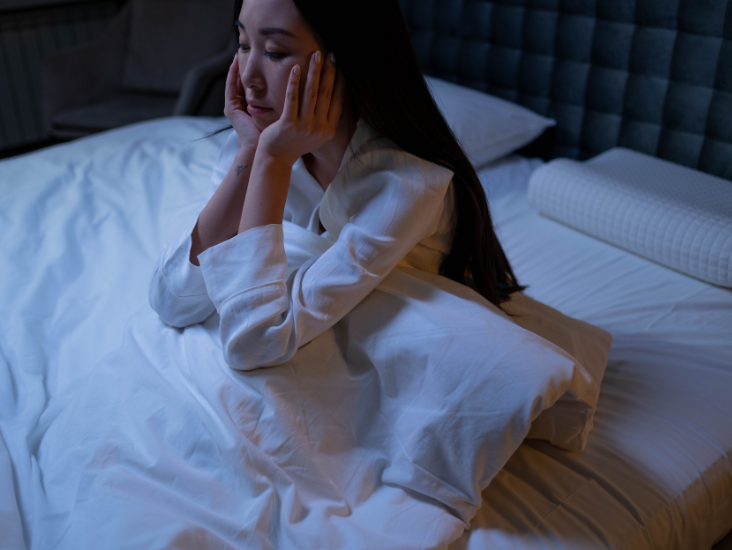
You finally climb into bed after a long day. Your body feels heavy and tired. But instead of drifting off, your brain hits the “on” switch. It replays every worry, every mistake, every awkward conversation from the past decade.
If that sounds familiar, you are not alone. A 2026 report by Amerisleep found that 92 percent of Americans have trouble sleeping because of anxiety at some point. In a large 2024 Chinese study, nearly half of adults said stress or anxiety disrupted their sleep.
You are exhausted. Yet your mind is wired. Over time, the bed itself can start to feel like a trap. That dread creeps in before you even turn off the light.
The good news? Research has come a long way. This guide gives you seven proven, science backed techniques for real nighttime anxiety relief. No empty advice. Just practical steps you can use tonight to calm your mind and finally rest.
Why Your Anxiety Hits Hardest at Night
Nighttime anxiety is not a separate disorder. It is regular anxiety that gets louder when the world goes quiet. During the day, tasks, screens, and conversations keep your brain busy. At night, those distractions vanish. The thoughts you pushed down all day float right to the surface.
Your brain’s threat detection system makes it worse. Deep in our evolutionary past, being alert in the dark kept us safe from predators. Today, there is no saber toothed tiger in your room. But your ancient brain does not know that. It treats a silence and a racing heart as a sign of danger.
Then there is conditioned arousal. If you spend many nights lying awake worrying, your brain learns: “Bed equals stress.” Just climbing under the covers can trigger a spike in sleep anxiety. You feel tense before anything even happens.
This biological glitch is real. But once you understand it, you can start to override it.
The Science of Nighttime Anxiety Relief
The seven techniques in this guide are rooted in that evolving science backed sleep anxiety solutions research. Each one targets a different piece of the puzzle, from your thoughts to your body to your environment.
To make this even easier right now, I built a quick interactive toolkit below. Answer a few simple questions, and it will suggest which technique fits your night best. You can also practice the cognitive shuffle, time a muscle relaxation session, or design your own wind‑down checklist — all inside the same tool. Give it a try before diving into the full techniques.
Your nighttime calm toolkit
Answer 3 quick questions to find your best first step, then practice it below.
👇What hits hardest when you try to sleep?
What feels most doable tonight?
How much time can you commit right now?
Type your swirling worries, then park them here.
Pick a neutral word, then let your brain wander through random images.
Follow the guided body scan. We’ll move from feet to face.
Tap play to simulate binaural beats. Put on headphones, close your eyes.
Find your ideal weighted blanket weight (aim for ~10% of body weight).
Tap the lavender to release its calming scent.
Choose your wind‑down steps, then start the timer.
1. Schedule “Worry Time” Before Bed
Your mind spins with what ifs. But what if you gave those worries a proper appointment?
This technique comes straight from CBT-I. The idea is simple: instead of fighting your anxious thoughts, you park them. Here is how.
Constructive Worry
Reset Ritual
📓 1. The worry dump
Two hours before bed, sit with a notebook & set a timer for 15 minutes. Write down every swirling worry — unfinished tasks, awkward emails, health thoughts. Let it out unedited.
✍️ 2. One tiny next step
Next to each worry, jot a micro-action — even “check on this Saturday.” Writing engages logic, shrinking the emotional charge of racing thoughts.
📖 3. Close & postpone
Close the notebook and say aloud (or silently): “I will get back to you tomorrow.” This is constructive worry — you’ve contained the spiral.
🌙 4. Break the panic loop
If worries return in bed, remind yourself: “I already handled them.” Still awake after 20 min? Get up, do something boring in dim light (fold laundry, read a manual). Return only when sleepy — sever the bed–anxiety link.
About two hours before bed, sit down with a notebook. Set a timer for 15 minutes. Write down every worry swirling in your head. The unfinished task, the awkward email, the scary health thought. Next to each worry, jot one tiny next step, even if it is just “check on this Saturday.”
Writing engages the logical part of your brain. It shrinks the emotional charge of racing thoughts. When you finish, close the notebook and say out loud or silently, “I will get back to you tomorrow.” This is called constructive worry.
If you get into bed and the worries start again, remind yourself that you already handled them. And if you are still awake after 20 minutes, get out of bed. Go to another room. Do something boring in dim light. Read a dry manual. Fold laundry slowly. Only return to bed when you feel sleepy. This breaks the link between your bed and wakeful panic.
These how to stop racing thoughts at night tools work best when you practice them consistently. At first, it feels strange. But your brain will learn.
2. Try the Cognitive Shuffle
If your brain is a car spinning its wheels in a ditch of worry, the cognitive shuffle is a gentle tow truck that pulls you onto a different road.
Dr. Luc Beaudoin, a cognitive scientist, developed this technique. It works by overloading your brain’s word and image processing just enough to block anxious rumination. It mimics the random, fuzzy thoughts you have as you naturally drift off.
Here is the step by step guide.
Pick a short, emotionally neutral word. “SLEEP” works. Then, for each letter, think of as many unrelated objects starting with that letter as you can. Visualize each one for a few seconds. S: sun, sink, spoon, sand, suitcase. L: leaf, ladder, lamp, lemon. E: egg, elbow, elephant. E: (same or a new word). P: pillow, pencil, piano, puddle.
Do not try to make a story. The point is the disjointed, nonsensical sequence. If your mind wanders back to worry, gently start again with the next letter.
Dr. Beaudoin’s free app mySleepButton guides you through this. It sounds too simple. But many people find it surprisingly effective at derailing racing thoughts at night and easing sleep anxiety.
3. Progressive Muscle Relaxation (PMR)
Your body and mind are a feedback loop. When your muscles are tight, your brain assumes danger. When you deliberately relax your muscles, your brain gets the signal that it is safe to power down.
Progressive muscle relaxation is one of the most researched tools for nighttime anxiety relief. A 2026 systematic review combined data from multiple randomized controlled trials. The conclusion was clear. PMR significantly reduces anxiety and improves sleep quality.
Here is a simple script you can follow in bed.
Lie on your back. Breathe slowly. Start at your feet. Curl your toes tight and squeeze all the muscles in your feet. Hold that tension for five seconds. Then release suddenly and completely. Notice the heavy, warm feeling of letting go for 15 to 20 seconds.
Move up to your calves. Tighten them. Hold. Release. Thighs. Glutes. Stomach. Hands. Arms. Shoulders. Face. Scrunch your whole face, then let it melt.
If your mind drifts, just bring it back to the next muscle group. No judgment.
This body first method works especially well if your anxiety shows up as jaw clenching, a tight chest, or restless legs. You cannot force your brain to stop thinking. But you can give it a calm body to listen to.
4. Listen to Music or Binaural Beats
Sound can be a direct line to your nervous system. A 2026 clinical trial tested a four week bedtime music playlist on people with poor sleep. The music group fell asleep faster and felt less anxious. Another 2026 systematic review found that binaural beats, which play slightly different tones in each ear, can also lower pre sleep arousal.
You do not need anything fancy. Pick slow, instrumental music with a tempo around 60 beats per minute. Classical, ambient, or nature sounds work. Keep the volume low. Even a simple white noise machine can help mask startling sounds that pull you out of light sleep.
Binaural beats require headphones. Many apps offer them. Start with a theta or delta wave track designed for sleep. The effect may be subtle at first. Think of it as a nudge, not a knockout button.
5. Use a Weighted Blanket
Weighted blankets use deep pressure stimulation. Gentle, even pressure across your body can shift your nervous system from “fight or flight” to “rest and digest.” It is similar to the feeling of a firm hug.
A clinical study found that participants who used a weighted blanket for four weeks experienced notable improvements in insomnia severity and daytime fatigue. Another trial is ongoing in 2026 to further test effects on anxiety.
Choose a blanket that is about 10 percent of your body weight. If you get hot at night, look for a breathable cotton cover. It may not solve everything. But for many people, that extra layer of calm makes getting into bed feel safer.
6. Inhale Lavender
Your sense of smell has a superhighway to the emotional center of your brain. Lavender is one of the most studied scents for relaxation.
A 2025 clinical trial with surgical patients found that inhaling lavender oil in the evening significantly reduced anxiety and led to better sleep quality. You can put a few drops of lavender essential oil on a cotton ball and tuck it inside your pillowcase. Or use a simple diffuser for 15 minutes before bed.
If you prefer an oral option, a specific lavender supplement called Silexan has strong evidence for anxiety relief. One 2026 review noted its effects can be comparable to a low dose of some prescription medications, without sedation or dependency. As always, talk to your doctor before taking any supplement.
7. Build a 30 Minute Wind Down Routine
Your brain needs a transition. If you scroll on your phone until the moment you close your eyes, you are telling your brain that night time is for stimulation, not rest. A consistent, calming routine tells your body that safety and sleep are coming.
Here is what an ideal bedtime routine for anxiety looks like.
First, dim the lights. Even a small lamp is enough. Bright light blocks your natural melatonin.
Next, switch to a screen free activity. Reading a physical book works well. One famous study found that just six minutes of reading can lower stress levels by 68 percent. Fiction can be especially absorbing.
Add gentle movement. Not a workout, but restorative yoga poses or slow stretching while breathing deeply. This releases physical tension without revving you up.
End with a short mindfulness practice. The Calm app includes guided sleep meditations. A 2025 pilot randomized controlled trial found that using Calm’s sleep content reduced anxiety and helped people fall asleep faster. The free VA app CBT-I Coach can also guide you.
The whole routine does not need to be perfect. Pick two or three pieces you enjoy. Do them in the same order each night. That predictability is itself an anxiety reliever.
A Quick Look at OTC Supplements
You will see shelves full of sleep aids. Here is a short, evidence based reality check for 2026. Always check with your doctor first.
Melatonin helps if your body clock is off, like from jet lag. It is not a direct anxiety reducer. Evidence for everyday insomnia is limited.
L Theanine is an amino acid found in green tea. It promotes calm alertness without making you drowsy. Some studies suggest it can help with stress related symptoms, but larger trials are still needed.
Lavender (Silexan) has the strongest evidence among OTC options for anxiety. It is well tolerated and non addictive. Effects may build over two to four weeks.
Magnesium Glycinate is popular. The theory is that magnesium supports relaxation. Real data for sleep is mixed and mostly based on small or short term studies. It may help if you are truly deficient. It is not a guaranteed fix.
No supplement replaces the behavioral techniques above. Think of them as a potential supporting actor, not the lead.
Your First Step Toward Calmer Nights
You now have seven proven tools for nighttime anxiety relief. Cognitive reframing. The cognitive shuffle. Progressive muscle relaxation. Soothing sounds. A weighted blanket. Lavender. A gentle wind down routine.
Do not try them all at once. That will just add pressure. Pick one that feels doable. Maybe it is the 30 minute wind down without your phone. Maybe it is the muscle relaxation script you do right in bed.
Consistency is your most powerful tool for lasting nighttime anxiety relief. Start small. Be patient with yourself. Reclaim your nights one quiet evening at a time.